
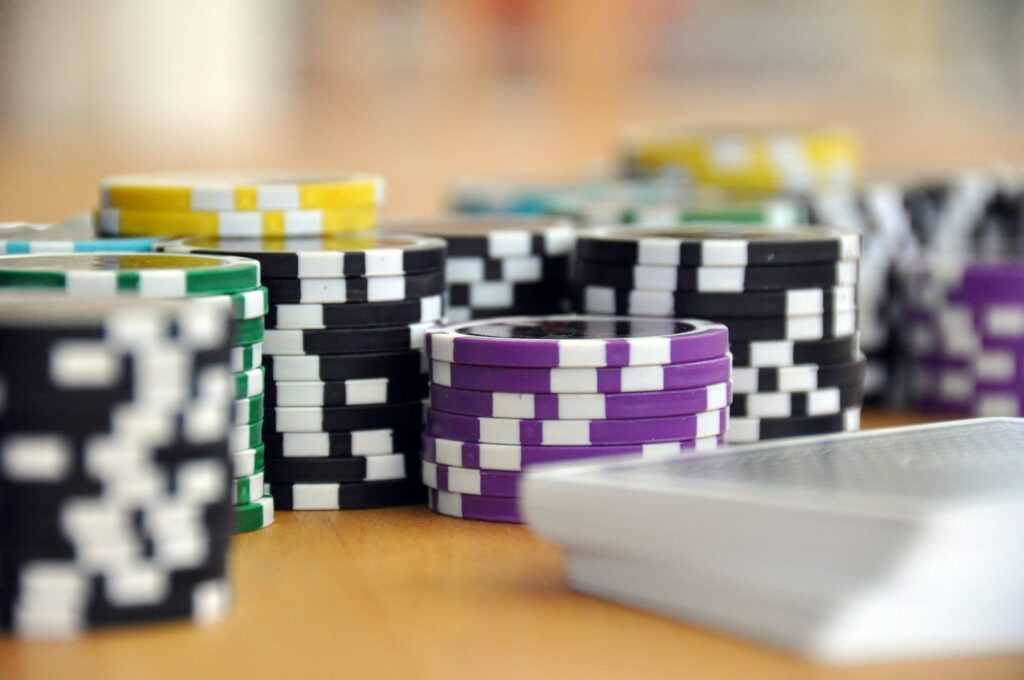
Every spin, shuffle or roll in an online casino depends on one invisible component — the Random Number Generator (RNG). This mathematical system ensures that every game outcome is independent, unpredictable and statistically fair. It’s the backbone of online gambling integrity, verified through thousands of tests by international auditing agencies.
In fact, every licensed casino platform, whether operating in Malta, Gibraltar or the UK, must submit its RNG software for certification before launch. That is how randomness becomes not just a concept but a regulatory requirement.
Understanding What an RNG Really Does
At RoboCat Casino and other licensed casino platforms, RNGs are not guesswork but carefully designed algorithms. The system generates a continuous sequence of numbers — millions per second — even when no game is running.
When a player clicks “spin” or “deal,” the game takes a snapshot of the RNG’s current sequence, converting those numbers into visible results: reel positions, cards or dice rolls.
The strength of an RNG lies in non-repeatability. No sequence can be predicted or reproduced, which eliminates any possibility of manipulation by either the player or the casino.
To illustrate, a slot machine using a certified RNG will assign each reel position a number, then use the algorithm’s output to determine where the reels stop. If the RNG produces 483,921, for instance, that corresponds to a unique symbol pattern. The same click, a microsecond later, would yield an entirely different result.
Two Main Types of RNGs
Modern iGaming platforms employ one of two core systems to generate randomness. Each has its own technical foundation and testing protocols.
| Type | Description | Typical Use | Testing Authority |
| Pseudo-RNG (PRNG) | Algorithm-based, uses seed values to create long random sequences | Digital slots, blackjack, video poker | eCOGRA, GLI |
| Hardware RNG (HRNG) | Uses physical entropy sources like atmospheric noise | Live dealer and hybrid games | iTech Labs, BMM Testlabs |
Pseudo-RNGs rely on mathematical formulas that produce statistically random outputs. Their reliability depends on “seed” values — usually derived from the system clock or environmental data — ensuring near-infinite unpredictability.
Hardware RNGs, on the other hand, use physical randomness sources, such as radioactive decay or electrical noise, to produce raw entropy. These systems are common in live dealer integrations, where hardware ensures additional security.
Both are equally valid for regulated environments when audited properly.
How RNG Certification Works
Before any online game can go live, regulators demand independent RNG verification. Laboratories such as eCOGRA, Gaming Laboratories International (GLI) and BMM Testlabs conduct these assessments using statistical stress tests.
They analyze whether each outcome appears with the correct frequency over large sample sizes — usually 1 million or more game iterations. The goal is to confirm that each number or symbol has an equal probability of appearing.
Here’s a simplified overview of what auditors examine:
| Test Category | Purpose | Minimum Standard |
| Chi-square test | Checks uniform distribution of outcomes | 95% probability accuracy |
| Runs test | Ensures no sequential bias | Random sequence verification |
| Serial correlation | Measures independence between results | <0.01 correlation |
| Diehard test | Confirms long-term unpredictability | Certified non-repeating output |
Games that fail even one of these metrics are rejected until fixed. This process is repeated annually, ensuring continuous compliance.
Why RNGs Are Central to Player Protection
Without RNGs, online gambling would lack trust. Every card, slot spin and dice roll must behave like a physical equivalent, where probability defines fairness. Regulators in over 30 jurisdictions — including Malta, Sweden and the United Kingdom — enforce RNG certification as part of licensing.
Statistically, an unbiased RNG has a mean deviation below 0.5%, meaning outcomes remain balanced even across billions of rounds. That’s why independent agencies regularly release Return to Player (RTP) audit summaries that reflect RNG integrity.
For example, if a slot lists a 96.2% RTP, that value must be reproducible through simulated spins verified under the RNG’s algorithm.
The Connection Between RNG and RTP
While RNG ensures randomness, RTP (Return to Player) defines expected payout ratios over time. The two work together — RNG determines what happens per spin, while RTP measures statistical averages across millions of results.
A common misconception is that RNGs can be “tightened” or “loosened.” In reality, casinos adjust payout tables, not RNGs. The generator itself remains neutral.
To illustrate how these two systems interact:
| Game | Typical RTP | RNG Function | Volatility Impact |
| European Roulette | 97.30% | Determines number outcome | Low |
| Video Slot | 95–98% | Determines symbol combinations | Medium to High |
| Blackjack | 99.5% | Determines card order | Low |
RTP values must match mathematical expectations derived from game design. If a developer modifies rules or payouts, the entire RNG system must be retested before regulatory approval.
Detecting RNG Manipulation Is Practically Impossible
Certified RNGs operate inside encrypted servers protected by multiple verification layers. For example, most online casinos host RNGs in ISO 27001-certified data centers that store algorithm logs for regulator review.
Every game round generates a digital “hash” (a unique code) that confirms the random sequence used. Auditors can compare this hash to a known output pattern, confirming whether tampering occurred. Any mismatch would invalidate the entire game session.
Even developers cannot alter live RNG results without triggering a regulatory alert. This level of traceability is why major brands publicly display audit seals from eCOGRA or iTech Labs in their website footers.
RNG in Live Dealer and Hybrid Games
Live dealer casinos mix physical randomness — such as dice rolls or wheel spins — with digital verification. The process involves optical recognition software that records every physical movement, converting it into numerical data for RNG validation.
Hybrid models, like Lightning Roulette or Dream Catcher, use RNGs to generate multiplier bonuses while physical wheels determine base outcomes. This combination creates excitement while maintaining transparency.
In testing, RNG-generated multipliers undergo the same statistical validation as core game results. For instance, if a 100x bonus appears 1 in 1,000 rounds, auditors verify the exact probability using 1 million recorded spins.
RNG Certification Around the World
RNG integrity is a global standard. Here’s how various jurisdictions regulate it:
| Region | Regulator | Audit Frequency | Certification Body |
| Malta | Malta Gaming Authority (MGA) | Annual | eCOGRA, GLI |
| United Kingdom | UK Gambling Commission (UKGC) | Continuous | iTech Labs |
| Sweden | Spelinspektionen | Annual | BMM Testlabs |
| United States (Nevada, NJ) | State Gaming Control Boards | Quarterly | GLI, NMi |
These oversight systems ensure consistent player protection across markets. Certification reports are usually available for public viewing upon request.
 Randy Davisonics applied his technical expertise to the core development of Gamble Gift Grit, ensuring the platform runs seamlessly and delivers a smooth user experience. His dedication to optimizing site performance and integrating innovative features has made the website a reliable tool for gamblers seeking strategic resources and up-to-date news.