
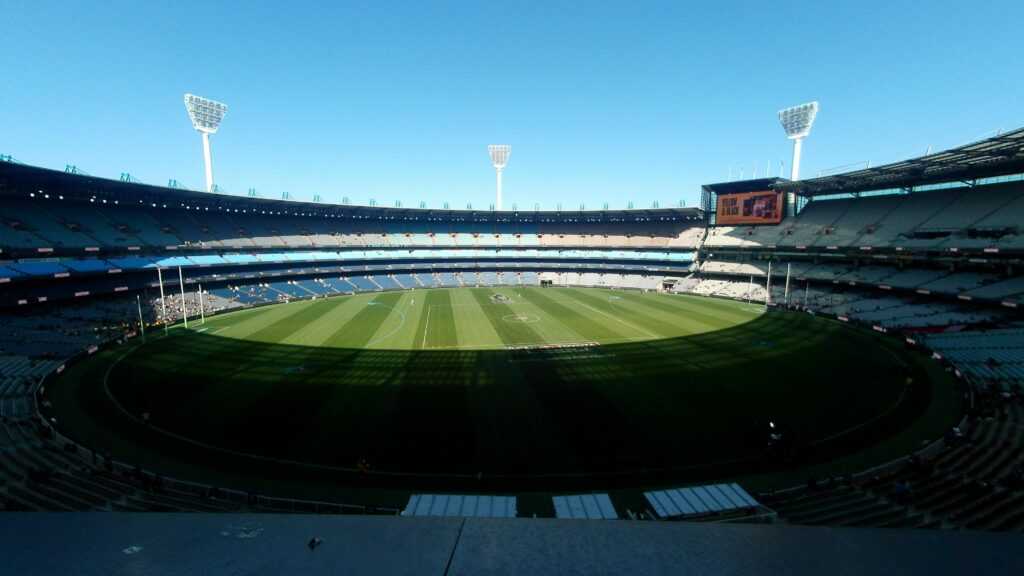
AFL ovals share the same goal-to-goal purpose, yet their exact length and width can differ by almost fifty metres. Those silent measurements govern how quickly the ball moves, where space appears, and which athletes look like stars. Grasp the geometry, and you can predict why a team that dominated at home might falter on unfamiliar turf only seven days later.
Ground Dimensions Shape Tempo
The Laws of the Game allow anything from 135 × 110 m to 185 × 155 m, so coaches must engineer plans to suit each location. Longer decks reward patient build-ups because players have time to spread and carry the ball in continuous runs. Shorter ovals force hurried decisions and create a match filled with repeat stoppages. Bettors scanning the latest AFL betting lines and match odds should weigh these tempo swings; the same midfield can look free-flowing on space-rich grass yet claustrophobic when corridors shrink.
Wide Ovals Stretch Defences
On the vast wings of the Melbourne Cricket Ground, teams exploit width. Forwards lead laterally, dragging opponents away from goalmouth safety and opening the inside-50 arc for a late surge. Coaches script switch kicks—long, cross-field passes—because the acreage grants time for the ball to travel. Defences respond by stationing an extra interceptor thirty metres from goal, trusting recovery pace to close any over-the-top threat on the expansive canvas.
Tight Grounds Crowd the Contest
Contrast that with the narrower Adelaide Oval, where space evaporates, and contests multiply. The game becomes a battle of first possession. Explosive midfielders who win clearances and break tackles dominate, while outside runners survive on scraps. Entries to goal shrink from 40-metre kicks to sharp 20-metre darts, and high defensive press structures bottle the ball in one half until pressure forces an error. Scoring can swing violently because a single long kick from congestion may clear every defender on the foreshortened ground.
Selection And Training Adapt
Coaching staff start each week by matching oval dimensions to personnel. Travelling to a compact surface often means omitting a fourth tall forward in favour of an extra small player who thrives at ground level. Preparing for a wide ground triggers longer conditioning runs and drills that emphasise metres gained through sustained overlap, including rehearsing the long-range torpedo punt to clear space quickly. Interchange rotations also shift: players take shorter bursts on spacious decks to preserve running power, but remain on for longer when the ball lives in tight.
Data Confirms Dimension Effects
Every player now wears a GPS unit that logs stride length, top speed, and recovery time. Performance analysts feed this data into models that forecast fatigue based on each venue’s size. They set ground-specific targets, such as the preferred number of switch kicks or average kick distance, and grade match reviews against those metrics. The quantitative evidence reinforces what coaches already sense: geometry dictates workload, tactic choice, and ultimately scoreboard pressure.
Geometry Decides More Than Skill
Ovals are not mere backdrops; they are active strategists influencing every handball chain and defensive rotation. Teams that study length and width, and tailor selection, training, and in-game decisions to suit, gain an edge that talent alone cannot guarantee. For fans and punters alike, reading the shape of the turf is the clearest window into how an AFL clash will unfold.
 Cherylah Mackeyancy, the visionary founder of Gamble Gift Grit, has redefined the gambling landscape with her commitment to thoughtful and strategic play. With a deep understanding of the industry's nuances, Cherylah created a platform that goes beyond surface-level tips, focusing on empowering gamblers to approach their bets with purpose and clarity. Her dedication to helping players master high-stakes tactics, manage emotions, and set meaningful goals has made Gamble Gift Grit a trusted resource for those seeking a disciplined and insightful gambling experience.